Friday, February 01, 2008

Rangefinders and Me

Most people don't care what camera they have or if they do take some time to choose they will pick the one with the most mega-pixels or the smallest dimensions. Both of these are important factors but there are some profound effects that different cameras can have on the way we take photographs. I've been thinking a lot about this since I finally saved up enough to get a Leica M8, the digital rangefinder camera and have been reacquainting myself with rangefinder photography.


Over many years of using, film, digital, large-format, medium-format, 35mm Single Lens Reflexes (SLRs) and rangefinders I find that each type of camera has a different character that combined with my own psychological peculiarities profoundly affect the photographs I take.

A quick run through how I got where I am now for context. My first "proper" camera was a second-hand Olympus OM-2, a camera I bought when I was 13 or so.


It was a lovely small 35mm SLR and I used that until I was 18 when my dad allowed me to borrow his medium-format Bronica SQ on a semi-permanent basis.


I used this camera until I was about 20 when my grandfather left me some money in his will with strict instructions to spend it on something. At the time my favourie photographers were Henri Cartier-Bresson and Andre Kertesz, both of whom used Leicas. And so it was that I got my father to pick up a second hand Leica M6 and a 1970s 50mm Summicron lens for me from Campkins Cameras in Cambridge.


I still remember handling it for the first time, the way it felt so natural in my hands. I'd loved the compactness of my OM-2 but for years I'd been used to the Bronica and Mamiyas at college. It was a breath of fresh air to have so small a camera again.

For anyone who has never used a rangefinder camera (which all Leica M series are) it is somewhat different to a SLR. Firstly you don't look through the lens, you look through a viewfinder that presents you with a much wider view of your surroundings. Going back to an SLR feels like looking down a tunnel in comparison. Second rangefinders are smaller than SLRs because they don't have all the mirrors and pentaprisms that SLRs need in order to allow you to look through the lens that puts the light onto the film (or sensor these days). This lack of extra mecahnicals has the added benefit of relative quiet. A rangefinder is much quieter when you press the shutter as the camera has no mirror to quickly get out of the way. Many perople do not like rangefinders because they can't accept long telephoto lenses, are seldom auto-focus and don't give you a depth-of-field preview. Certainly were I a wildlife or sports photographer whose stock in trade is long lens shots I would not choose a rangefinder.

So why do they work so well for me? well the majority of photographs I take tend to be of people within the context of an environment or of an environment alone. In both instances the position and relationship of the me, the photographer, to the scene is very important. I like my photographs to give the viewer the feeling of being a participant in the scene, to be within the environment rather than voyeuristically looking on from afar. For this reason I've never liked using long lenses for my pictures as they have the inbuilt quality of removing the viewer from the centre of the action and compressing depth.

When taking photographs I find the wider viewfinder puts me within my surroundings more; I feel part of the scene rather than feeling like I'm only observing a tiny proprtion of it through the lens. Seeing more than I can shoot helps me anticipate action, enables me to play with different compositions more easily, work out whether I need to move closer to or back off from my subject and all the while knowing that the camera is quiet and discreet enough not to become the centre of attention.

When I finally made the decision to go digital (a mixture of not being able to find the chemicals I liked to use for film processing anymore and a desire for an easier life) I opted to get a Canon 20D, the best semi-pro digital SLR available at the time.


It is a very fine camera but I do have complaints though they would equally apply to any other modern SLR. Firstly, compared to the Leica it is huge. It is very hard to work disreetly; the camera is so big and loud that it draws attention to itself at once; you become the centre of the action rather than reacting to what is going on unobtrusively. Second it tries to automate everything. I find that the more I have to concentrate, the more I take better pictures. By forcing me to focus manually, as the Leica does, I feel more connected to the scene. You can, of course, use Canon lenses without the auto-focus but the manner of their construction is so biased toward automatically focussing that using the lenses manually is rather like driving a car with powered steering compared to one without. I don't feel directly connected to the mechanics of the camera as I do with a fully manual lens.

Similarly I find being forced to manually select aperture and shutter speed also concentrates my mind though this works equally well on the Canon as it does on the Leica so this is not to praise one sort of camera over the other.

Many people vastly prefer auto-focus and auto-exposure because it frees them to concentrate only on composition and when to fire the shutter. I can totally understand that viewpoint but it doesn't work for me. The less I have to do, the lazier and less focussed I become. I end up with
very voyeuristic photographs, exercises in composition rather than photos where I am involved in the action. The Leica, being in effect totally manual, makes me work for my photographs whilst its design and dimension allow me to position myself within an environment and work without becoming the centre of attention, without contaminating the scene too much with my presence. It is for this same reason that I don't use flash, it attracts too much attention to itself, but that's a topic for another post in its own right.

So my point is that there is no "best camera" out there for everyone. I've used pretty much every type of camera there is and I can see merits and applications for all of them (except the Leica R9 which is as God-awful a piece of expensive rubbish as I can think of and I still don't understand what my dad sees in his) but everyone has differing priorities and needs. Choosing the right camera is more than looking in at the brochures to see which is the latest and has the most megapixels. It has to feel right, to sit in your hand and come to your eye naturally. The more your camera helps you concentrate on the moment of taking the picture and the more it feels like an extension of your eye into the world the better the photographs you take will be.

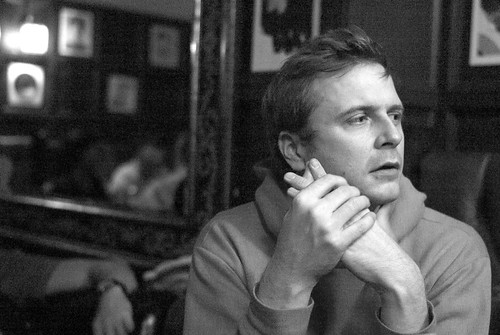
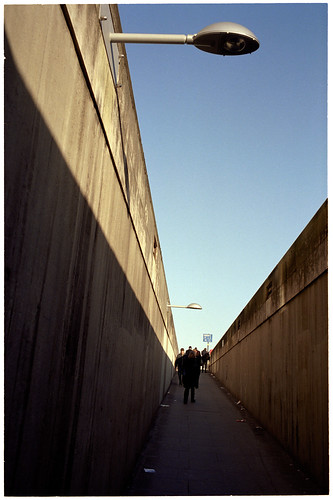
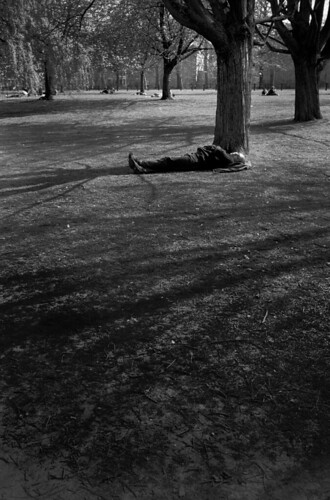
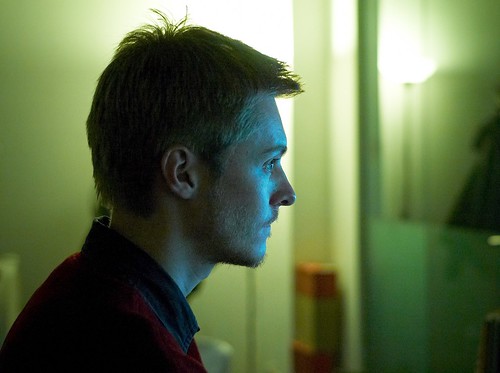
Here are a few photogaphs I don't think I'd have been able to take with a non-rangefinder camera. Rangefinders aren't for everyone but they really work for me:
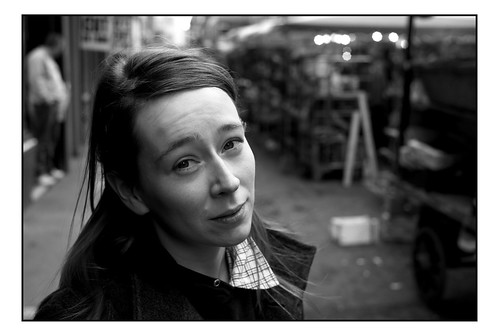
Heg Quizzical

A Tourist, A Pigeon and Admiral of the Fleet, The First Earl Jellicoe

Adie

Commuters

Lazy Afternoon

Quiet on the Building Sites

Alexander

Labels: , , ,

Saturday, November 17, 2007

The Backlash Against Computer Generated Imagery

N.B. I have not corrected any of the quotes in this piece for spelling or grammar. They are mostly culled from the comments section of this article in The Guardian and, as is common for comments they are posted in a very stream of consciousness fashion with little proof-reading. Please imagine your own (sic) throughout.


"Now I should point out before we begin that I have major, major issues with digital effects. I had to go through several months of counselling after witnessing the sight of Jabba the Hut digitally recreated and superimposed onto a previously deleted scene in the "updated" version of the first Star Wars film (I refuse to refer to it as A New Hope). And I haven't yet seen Elizabeth: The Golden Age, but plan to keep things that way after viewing the trailer, which features a Spanish Armada rendered completely devoid of grandeur and menace through the use of CGI.
...
"Frankly, I would happily see a blanket ban on all digital effects in film, tomorrow. Imagine if science fiction movie makers had to use their ingenuity again when depicting spaceships and monsters (as in the original Alien). We might witness a return to the practice of using scale models, such as those in the original Star Wars films, which were 100 times more realistic than their CGI equivalents in George Lucas' rubbish triptych of prequels." - Ben Child writing in The Guardian

For every well reasoned piece written about CGI there are a mountain demanding a backlash. Most of these pieces and innumerable fora comments are targeted against computer generated visual effects and this week came the call, albeit tongue in cheek, for all CGI to be banned. There seem to be two strands to the complaint. The first is that films with visual effects are aesthetically inferior to those without. This argument is generally couched in terms like "not real" or "fake looking". This is a complaint about the actual imagery produced. The second line of attack comes against the processes themselves and those who use them. Digital effects are created by "boffins" rather than artists and they are made "by a computer", the implication being that no human effort or talent has been expended in their production. Directors are lambasted for resorting to digital trickery rather than using ingenuity and talent as previous generations had.

Before examining the state of digital visual effects it is perhaps worth looking at what qualities are lauded by these critics and therefore, by extension, what CGI apparently lacks. The over-riding concern seems to be one of ingenuity and craft. The hand-crafted models in the 1977 version of Star Wars are regarded more highly than the digital creations in Revenge of the Sith. The question is why? Are they more realistic? This is a very loaded question. Realism is a slippery beast. Is the complaint that, if the film-makers were to construct full size examples of these ships, put them into orbit and photograph them and then compared that footage with a CGI version and a traditional model, the model would more closely resemble the real plate? That is a tough question to answer objectively in this instance. We can however compare the huge amount of virtual set work done using CGI where a digital element takes over from a practical set. Take the exterior of Newark Airport in United 93. This and every aircraft exterior was created digitally, apparently without complaint. If therefore, digital effects artists were able to create, with scientific precision, an object would that then be acceptable or is there more subjectivity at work here?

When Troy was released, complaints were raised in some corners that the ships in the Greek armada had too tiny wakes and almost no bow-wave, a sure sign they said of CGI trickery. A little nautical knowledge is a dangerous thing. The Greek penteconters upon which the CG armada was based were keel-less and had a very shallow draft. There is minimal surface contact between the boat and the sea because it is much harder to row a boat that sits deeply in the water, overcoming drag becomes exhausting and your crew mutinees. These ships create no wake at all, one can examine footage of the 'Olympias', the trireme (a much larger vessel) built for the Greek navy in the 1980s. When creating the effects for the film, the VFX team, of whom I was one, elected to put some wake in as we felt, artistically, it looked odd without them. Perhaps we did not add enough fakery to make the ships believable to that section of the audience. The bow waves were photographically sampled from a real penteconter and layered onto the CGI ships incidentally; they could not have been "more real". The difference between realism and believability is key. They are not synonymous. It is not "reality" that the opponents of CGI crave, it is a believability that they see modern films with digital effects lacking.

Believability of course implies "suspension of disbelief". Everyone, but the most credulous, is aware that fictional films are just that. The events portrayed did not occur. Looking at the mechanics of film-making we do not in reality see in a series of edited long-shots and close-ups. We however buy into their believability because of our continuous exposure to them from the first moment we are placed in front of a television as a tot. We absorb what these devices mean to the point where we no longer need consciously to decode them. Much as when reading a novel the experienced reader does not consciously decode the squiggles on a page into letters, process the assortment of letters into a word and then recall the meaning of that word - this happens subconsciously. We experience cinema similarly, there are tropes, conventions and stylistic choices we learn instantly to decode. Puppetry and model making fall into this category. We understand, certainly in the case of films we saw uncritically as children, the symbolism of the animated Talos in Jason and the Argonauts. Though beautifully animated what we see on screen in no way matches what a 100ft tall bronze giant would look or move like, but we learn how to read this image, how to understand it. We learn how to believe it, and images created in the same manner. Such is the depth of our immersion and our ability to believe in these narrative conventions that a journalist can write the following and no-one will pick him up for making an obviously fatuous statement that live-action films are "real":

"On the other hand, for a movie which features what should be appalling scenes of men having their heads bitten off and gently crunched by Grendel, perhaps the most hideous creature ever to be shown on the big screen, not to mention Angelina Jolie starkers, it somehow fails to really get the blood pumping. And I can't help feeling that's down to the fact that the use of CGI is less affecting than live film. If it's not real, why should we react to it as though it were?" - Ben Child


As we become older, more critical and sophisticated, this entrenched belief changes into a nostalgic familiarity for what we loved and responded to when younger. It is now the aesthetic we delight and believe in. The more familiar the trope, the easier it is for an audience to become immersed. To use the literary analogy once more; if, whilst reading a novel, we come across a word we do not understand we are immediately jolted out of the narrative, the artifice of the literary form laid bare in front of us. This is the problem that CGI has to overcome. For those of an age to post on the Guardian website, CGI effects have come after childhood. There is no deeply ingrained way of decoding them. The only time they work for this audience is when they don't notice them because they are so seamless. To put it crudely, this is why critics respond more harshly to imperfect CGI than they do to sub-par models or puppets, they have no inbuilt mechanism for subconsciously decoding what is happening on screen. The huge, sweeping "impossible" camera moves jolt for the same reason, they lie above our subliminal understanding. That these artificial camera moves are so often combined with CGI merely compounds the problem.

The natural reaction of people to something they don't like is blame. In the case of CGI that blame is generally aimed in two directions, the film's directors and those who actually do the work. Directors are blamed for being "lazy" and visual effects professionals are either labelled "boffins" (another way of saying, in the popular lingo, not artistic or creative) or irrelevant because the effects are created by a computer not a person. This is not as complex an issue to understand as the reaction of an audience to what they see on a screen. This is simply an issue of ignorance and misunderstanding.

Part of the problem is that the process of creating CGI is very complicated, full of acronyms and has a massive learning curve for anyone wanting to understand it. Most people have dabbled with a paint set at some point in their lives, even if only as a child. There is some knowledge therefore that creating a beautiful painting is difficult. We understand how it is done and most of us understand that we cannot do it as well as Rembrandt. The same can be said of puppetry or model-making. We can see that professionals do it so much better than most amateurs. Amongst the majority of consumers of cultural product there is a mannerist appreciation of difficultà or skill. Again from the Guardian comments:

"When it comes to special effects vs. real spectacle, let's be honest. Sometimes, we pay for the thrill of watching people do something difficult, perhaps dangerous or just really, really impressive." - BigBennyBoy


This is not new. John Donne, the poet and preacher, wrote in his "Sermons" (1649) about judging the quality and worth of a painting based on the technique of the artist thus:

"A picture without any drapery, any clothes about it...is much a harder thing, and there is much more art showed in making a naked picture, then in all the rich attire that can be put upon it".


If the average audience member believes that CGI is created by a machine without human input it is quite understandable that they would look upon it as an inferior art to that of a model-maker or painter. Even the term "Computer Generated Imagery" perpetuates this myth. I presume the term, "Artist Designed Computer Generated Image" was deemed too unwieldy. Just as a painter is not criticised for not making his or her own brushes and pigment, neither should the digital artist be lambasted for his or her choice of tool. Every digital effect is designed, described and planned by a human, or more often, a team of humans. Within 50ft of me there are painters, sculptors, animators, model-makers, graphic-designers, engineers, scientists and mathematicians. There will be many for whom the inclusion of the latter three under the heading of "creatives" will seem odd. Surely these are "boffins" so scathingly described thus:

"I actually don't think it's the technology that's to blame. It's the folk that 'use' it...the boffins that harness the tools, are blinded by the possibilities; instead of an artist with a vision we get a gadget obsessed dad in front of a flat an HD TV fiddling with the controls and marveling at the apparent improvement in quality.
I don't think they're is anything wrong with CGI or any digital technology, it's just the people of a certain age and temperament that get very aroused - possibly sexually - by the lengths that can be reached, exaggerated, spoiled, overdone, and polished to an unnatural sheen when working in this field.
Boffins are to blame. You have boffins making films. All should be controlled by the director." - francaisenyc


This comment suggests that those with technical skill must de-facto have no artistic ability, or to put it another way, they are not creative. It is a huge failing of our society that mathematics, engineering and computer programming are not seen as creative disciplines, quite the opposite in fact. When one actually examines them it becomes increasingly apparent that they are deeply creative, but it requires a certain basic level of understanding to appreciate it. If one is illiterate then there is no beauty to a novel. We do not however argue that because there are people who are illiterate that the novel is an invalid art-form; we instead suggest that they should perhaps learn to read. Appreciation of any art-form or culturally creative endeavour requires an investment of intellect and time from the audience. Films and TV are absorbed from an incredibly early age, reading comes a little later. To understand the basic principles of computer programming, mathematics or engineering takes effort and time; if one does not spend that time it is unsurprising that looking at the results of these disciplines is unrewarding and perhaps challenging, maybe even an affront. A computer programme can be a very beautiful thing indeed. When its output is an image of delicate complexity and depth it has an additional level of aesthetic quality that even those without an understanding of programming can appreciate. One comment from the Guardian piece writes:

"The wonder of film was in seeing the smoke of the train coming into the station, the rustle of the leaves in the trees. There's nothing wrong with faking these things - the broiling, rolling seastorm in Pinocchio is an artistic achievemennt of the highest order - but when you fake it with algorithms you simply throw away the mysterious germ of truth in film" - ruskin


I am unsure precisely what point is being made here. In reality smoke moves in a mathematically describable way, as do the leaves on trees, these are the laws of physics. A sophisticated piece of fluid dynamics software in the hands of a technically savvy artist can produce utterly beautiful, convincing results. The smoke can be controlled to behave in a fantastical fashion (wizards apparating in Harry Potter) or to mimic reality incredibly closely. For example, the smoke, along with the towers and debris in World Trade Center was created digitally for obvious reasons. The "mysterious germ of truth in film" sounds to me like a pseud's way of describing nostalgia once again mixed with a great deal of ignorance of the processes that are involved in CGI's creation, either in reality or in simulation.

So, seemingly, it all comes down to familiarity and comfort. Children emerging from any of the Star Wars prequels had the same expression of magical delight on their faces as I did seeing The Empire Strikes Back or Return of the Jedi in the 1980s. For this new generation, the current debate on CGI will seem archaic and incomprehensible. In 1929 The American Federation of Musicians ran a series of press advertisements following the introduction of "fake" (pre-recorded) music into films:

"This is the case of Art vs. Mechanical Music in theatres. The defendant stands accused in front of the American people of attempted corruption of musical appreciation and discouragement of musical education. Theatres in many cities are offering synchronised mechanical music as a substitute for Real Music. If the theatre-going public accepts this vitiation of its entertainment program a deplorable decline in the Art of Music is inevitable. Musical authorities know that the soul of the Art is lost in mechanisation. It cannot be otherwise because the quality of music is dependent on the mood of the artist, upon the human contact, without which the essence of intellectual stimulation and emotional rapture is lost."

The idea that someone could object to a recorded film score seems laughable now. In 30 years I believe we will see reprints of the piece from The Guardian being sniggered at in the same way.

Labels: , , , ,

Friday, September 28, 2007

Realising Fantasy

One of the aspects of my job which is hardest to explain to non-VFX people (or "muggles" as I am now tempted to pretentiously and ridiculously call them) is that of interpretation. When we are charged with creating a fantastic entity, be it a machine or a creature, we are generally presented with some kind of concept drawings from the production art-department. These generally bear no resemblance to what the client actually wants the finished effect to look like but that's a topic for another, more embittered post. Let's suppose, for the sake of argument, that the concept sketch is the perfect graphite or gouache embodiment of what the client wants. "Right, well go and make it then" you say. "Ah", I reply, "but it isn't as straight forward as that because we have to interpret the drawing."

How can this be? It seems so obvious, here's the drawing, the plan if you will, how much clearer could it be? The difficulty is that concept artists and model-makers have a different agenda to us. They want to create a beautiful image/sculpture that works as an immobile art-work. We have to realise this vision as an entity that works visually from any angle, but also probably moves and often in a very complicated way. To think of a reductio ad absurdum example of this, M.C. Escher's drawings are beautiful and very detailed but you couldn't actually build them. On a lesser level all artists, either knowingly or not, put these kinds of tricks of the eye into their work. Sculptors who produce statues only need the body to work in the pose that they're carving, if it is a figure it doesn't have to articulate. I can think of a show I worked on where the clients had spent a lot of money getting a life-size and quarter life size sculpts of a character made and then cast in silicone. These were then duly delivered to our studio with a "Build that!" brief attached.

As we examined the modelling we realised that the way the the trapezius muscles had been placed and modelled meant that the creature could never turn his head. We looked at the clavicle, and this was angled in such a way that his shoulders could never articulate. The pot belly had musculature on the outside, just under the skin (was he pregnant? - seemed unlikely) and the thigh muscles were simply attached in the wrong places to move the legs. Had we realised the concept as delivered the character would have been just about able to bend his knees and elbows and that is all. "But, surely this is all fantasy", you say, "Surely you can do anything in visual effects?" Well, yes we could have made a perfect copy of the sculpt and put a CG skeleton and muscles inside and made it move. But it would only ever look like a real actor wearing a heavy latex suit. Or to put that another way - rubbish.

Our eyes are very adept at seeing structures under the surface of the skin, seeing how joints move, how muscles move and how the skin slides over them. If we cheat on this, it immediately begins to sound alarm bells in all but the most obtuse viewer. One of the main reasons why Gollum, King Kong and Davey Jones are such leaps forward are that they are the results of countless hours of careful anatomical analysis, the development of new tools to simulate muscle and skin movement and the application of those tools by diligent and technically obsessive artists.

And so we don't leave these sketches alone, we have to interpret them and this can be a protracted and argumentative process as you have to persuade the client that the design they signed off on will never look right "on the move". Notice I don't say "look correct" here, but "look right". We can and do cut corners in this design process. We generally do not simulate every single muscle, it would take too long with current technology but we have to do enough that the viewer sees a convincing creature, one that has believable weight distribution, moves as our minds with years of experience of looking at a wide variety of creatures thinks it should move and seems part to the world it inhabits.

And that, dear reader, is the situation I find myself in at present, and have been for most of the last fortnight - interpreting someone elses drawings and written briefs, trying to visualise how to make their ideas work in a believable manner in CG. I think my retinas may start bleeding imminently.

Labels: ,

Sunday, September 23, 2007

Art for Art's Sake


I have been asked to run an advanced lighting course at work to try and take junior and mid-level artists up a notch in their lighting skills. To that end I spent most of yesterday photographing photographs (like the Josef Koudelka above) and paintings to use as slides and as lecture notes.

It's something I very passionately believe in as I was fortunate enough to go through a full art education before I ended up doing computer graphics. When I was at art college there really weren't any computer graphics courses and so most people of my generation in the industry come from fine art, photography or graphic design backgrounds if they're creative types or computer science or engineering if they're more technical. These days there's an abundance of fully computer graphics orientated degree courses and most graduates we now employ come off one or another of them. I personally do not think that this is a good thing, primarily because they leave school at 18 and go straight onto these degrees. Back in the day (12-15 years ago) if you wanted to do a creative degree course you had to do a one year "art foundation" diploma where you did life-drawing three times a week, studied art history and practiced every type of art production from print, to paint to film so that by the time you went onto your degree you were a well rounded creative person with a developed eye. This does not happen any more and I see it in the work we produce as an industry - it's all very clever and innovative but not much of it is particularly beautiful. And that's where I come in apparently.

I have to distill a year's course into 3, 1 hour sessions. I'm actually really looking forward to it even though I'm having to do it during my free time at home because work has suddenly got so busy. Once I have some sort of syllabus I'll probably post it here for review since I know that there are arty types who read this and hopefully have an opinion.

Labels: , , ,

Wednesday, September 05, 2007

Toward A Lost Art

Ridley Scott has suggested that devices such as mobile 'phones and other gadgets that can display video are killing cinema. "We try to do films which are in support of cinema, in a large room with good sound and a big picture. But we're fighting technology" he said yesterday. It's an interesting idea and, as has been mentioned elsewhere, the televisualisation of cinema goes much further than its distribution mechanism - it is endemic in production too. Ridley Scott is certainly one of the directors who makes film for the cinema screen and, whatever the merits of his recent output, you can't say he doesn't know how to frame a shot for a 40 foot screen.

It is interesting how films can evoke different emotional responses depending upon how they are viewed.

Sticking with Ridley Scott as an example, I was used to watching "Alien" on a TV screen for years before I got a chance to see it at the cinema. When I helped run the film society at the art college I attended we discovered an anamorphic lens for the 16mm projector in the back of a cupboard and thus decided to hold a "widescreen" season in its honour. Amongst others we rented "Jaws", "Blade Runner", "Dirty Harry" and "Alien". The print for "Alien" was so old it had an 'X' certificate rather than an '18' and probably hadn't been loaned out by the BFI in a decade. After an afternoon patching up the splices on the brittle reel ends we were able to screen the film for the twenty or so students who could be bothered to come and see this classic as it was meant to be seen. I knew this film backwards, every shot, every edit and yet seeing it on a large screen made the whole experience radically different. The shots which really affected me differently on the big screen were the long tracking shots, for example those at the beginning of the film as we move through the intestines of the 'Nostromo'. On a small screen this has no impact beyond exposition but when the image is more than life-size and fills your peripheral vision the sense of place becomes palpable - one inhabits the space. The effect of having your eyes drenched in this new world is utterly transportative and you instantly become part of the narrative before you have seen an actor or heard a single line of dialogue.

I had exactly the same experience seeing "L'Année Dernière à Marienbad" on a cinema screen at the Curzon Mayfair for the first time last year - the long shots travelling though the baroque palace serve as transportation for the soul of the audience out of their seats and into the world of the film. Any narrative where a sense of place is important, or where a location almost becomes a character in its own right, like The Nostromo or the palace at Marienbad, is best served by the scale of a cinema screen; it envelops us rather than us dominating it. Similarly films where the characters' relationships with a location are important, "Brokeback Mountain" or "Treasure of the Sierra Madre" leap to mind, rely upon placing us, for empathetic purposes, into the same environment as the protagonists.

These shots are made for a cinema, not for television. Watching them on a smaller screen simply does not have the same visceral impact. It's like looking at a Mark Rothko painting reproduced in a book: it gives you an idea of what the piece is about without any of the actual substance. This is not to diminish TV, merely to point out that work designed for one format seldom translates intact to another. To give another hypothetical example: it would be like watching a soap opera on a cinema screen where the continual close-ups of heads and mid-shots would have you crawling for seats right at the back pretty quickly. This type of talking heads visual media is designed for a TV screen and that is where it works best.

So I understand what Scott says, and I largely agree. If we make films designed to be viewed on a small TV screen we will lose something that only a big screen can give us. For me, seeing Grawp in "Harry Potter and the Order of the Phoenix" on the IMAX screen where he truly appeared gigantic, gave me a greater sense of who he was as a character and what he was capable of than all the hours I spent in front of a monitor working on those very same shots.

Similarly the close up of the full size mechanical Kong's face from the 1933 version, which appears comic because of its limited movement on television, (and has been duly parodied shot for shot in the Simpsons' "Treehouse of Horror III" for that very reason) looks truly menacing when viewed on a full size cinema screen.

The ever increasing use of iPods and 'phones to watch video is not a bad thing per se. What worries me is that cinema is becoming less like cinema, it is seldom a transportative experience anymore and we seem to be headed to a world where homogeneous visual entertainment, which works equally badly via every method of delivery, becomes the norm. Indeed, if we are not careful we could lose those special qualities that each medium has to move us.

Cinema suffers a worse fate than the others though for an additional reason. Whilst modern televisions far exceed previous generations in terms of quality, going into a modern cinema no longer feels like entering a magical land of strange promise and wonder. I am not being nostalgic here. Everytime I go to the Curzon Mayfair I am reminded what "going to the cinema" really means. The architecture, the design of the seats, the interior design of the auditorium all make the experience special. Modern cinemas are nearly all tin sheds on industrial estates on the outskirts of towns and inside they look like cheaply designed and built service areas found on motorways. Even supposedly prestige venues like The Odeon Leicester Square feel cheap and tacky though the ticket prices certainly aren't. I cannot blame people for abandoning the cinema, the films are designed for TV and the theatres are tawdry. Having a projector and surround sound at home becomes increasingly affordable and why would you choose anything but that? It is a shame, and I am glad that I have been lucky enough to experience a real cinema as it is an increasingly rare phenomenon. Anyone who says seeing a properly cinematic film on TV is no different to seeing it in a theatre has clearly never watched "2001 A Space Odyssey" on 70mm in a 1950s purpose built modernist cinema. That is an experience I will always treasure whatever happens to the artform over the coming years.

Update: Once again I find myself wandering down paths previously trodden by Kristin Thompson and David Bordwell. Here, Bordwell discusses watching films on his iPod.

For the most part, I don’t watch fiction films on my iPod. I watch documentaries... I don’t watch TV at home, but I catch up with shows like The Shield and The Wire via my iPod. I watch some YouTube clips, especially the Two Chinese Students (aka Back Dorm Boys), which always give me a lift.

But I confess I’ve also put on films that work, for me, like favorite music. These are films I know well and love to look at in idle moments.

I wonder whether the desire to watch documentaries and TV is because of their talking head formatting which works well on a tiny screen? Most other iPod owners I know (myself included) also have have what I refer to as "comfort food movies" on their iPods: films we know backwards already where the tiny iPod image is really just an aide memoire to the version we carry in our heads. Here the iPod is not really subverting cinema as we aren't using the device as a replacement for cinema, it is merely a crib sheet for our memories to relive those precious moments in the dark.

Labels: , ,

Friday, August 31, 2007

It's TV, It Ain't Cinema

David Bordwell has written another excellent piece on modern cinema, this time on the style of film-making in "The Bourne Ultimatum" which, in typical Paul Greengrass fashion, is a dizzy melange of kinetic hand-held camera work and slashing edits. Bordwell summarises his resistance to the style thus:

(1) The style isn’t original or unique. It’s a familiar approach to filmmaking on display in many theatrical releases and in plenty of television. The run-and-gun look is one option within today’s dominant Hollywood style, intensified continuity.

(2) The style achieves its effect through particular techniques, chiefly camerawork, editing, and sound.

(3) The style isn’t best justified as being a reflection of Jason Bourne’s momentary mental states (desperation, panic) or his longer-term mental state (amnesia).

(4) In this case the style achieves a visceral impact, but at the cost of coherence and spatial orientation. It may also serve to hide plot holes and make preposterous stunts seem less so.

I agree with all of these but I thought I might add a couple of points about the origins of this style and possibly why it is more prevalent now than in the past.

We can summarise the style as comprising loosely hand-held camera work, sharp focus pulls and then blistering quick edits in the cutting room. I first recall seeing this style of film-making on television in the mid-nineties. I remember people at the art-college I attended getting very excited by the series "This Life" which featured the hand-held camera and the hard focus-pulls if not the quick edits. But this was television, and a TV screen is contained comfortably within your field of view, is inherently less immersive and requires the use of big graphic styles to make any impact. We can, and often do, move around whilst watching TV so our spatial relationship with the screen is quite dynamic. This is not so at the cinema. More kinetic styles work well on TV because it is less intrusive into our field of view and its smaller scale means it has to be bolder to be seen - it cannot perform subtlety of style like the cinema can.

The style was simultaneously being used by documentary makers, often those on a budget and shooting with just a single camera. The quick reframes and focus pulls would be edited out were more coverage available but the lower the budget, the less coverage and so more of these "mistakes" end up on screen and eventually become indicative of a small-scale, non-corporate project. Even now documentaries can be seen with this style. "Mondovino" by Jonathan Nossiter was self-funded and self-shot and though its subject matter, the international wine industry, is rather more sedate than a Jason Bourne outing Nossiter's film has the hand-held, pull focus style that we come to associate with the rebel documentary maker.

These are tropes for mainstream Hollywood though. These films are not low-budget, nor are they really run and gun film-making. The VFX studio Double Negative has put months of work in on Greengrass's film, making all that expensively shot material look as though it were captured just as it is seen. The use of green screen elements, CGI are all on a par with any other big budget action film, because that's exactly what the film is. Hollywood hopes to get us to believe that this is a "grittier" more "real" vision of the action film by aping the mannerisms of the indie documentary or edgy TV series. I don't agree. It makes it seem like lazy film-making for television, not cinema. When one then considers the hack and slash editing style that is then layered on top to ramp up the kineticism further we often end up with an incoherent mess.

It is the pop video editing piled on top of the rebel documentary visual stylings that finally push them into the absurd. The relentless manner of these films' construction in fact makes the drama and narrative terribly one dimensional. If there is no variance in pace, framing or movement then the eye and mind adjust to it until the fast cutting seems normal. Speed is relative. If there is no slowness to contrast the frenetic action then action seems staid. Three rapid cuts after several longer ones have impact. Three rapid cuts after 120 previous rapid cuts have none. By shooting and cutting dialogue scenes like a low budget pop promo doesn't make the film more exciting overall, it in fact reduces the impact of the action when it begins.

I often wonder whether a great deal of the televisualising of cinema has come about because of the reliance of directors on video-assist technology. These devices allow the director to watch exactly what's being filmed on a small TV set as it is being shot and then use that video to edit the sequence before the film cans have even had the chance to be taken for development. The days of 'dailies sessions', where rushes of the previous day's film are screened on a cinema screen, are gone to great extent. Directors and editors do much their work on a film by looking at a TV screen or computer monitor. I suppose we shouldn't be all that surprised that they end up making faux indie documentary television not cinema.

Labels: , ,

Thursday, July 12, 2007

Good Press

The Times has its review of "Harry Potter and the Order of The Phoenix" up and the review concludes with the following:

"But the unexpected charmer is Hagrid’s half-brother, a simple, sad giant who takes a fancy to bossy Hermione. Although entirely rendered in CGI, the giant outacts several of the supporting cast members with a moment of pure pathos – seeking to impress Hermione, he roots around in his pile of junk and comes up with a bicycle handlebar which he passes to her, gently ringing the bell and scanning her face for approval."

Thank you Wendy Ide, it's nice to have our work appreciated. Given that single scene took us a year and half to make it's really appreciated when someone likes it. I'm a bit buzzy now.

Update:

From the Ain't It Cool review :

"The effects are also fantastic. Both Grawp, Hagrid's brother (a full-blooded giant) and Kreacher (the twisted house elf who calls Sirius Black master) make you forget how poorly Dobby and the Troll were handled earlier in the series. Of course, the effects worlds have made big leaps since the first film, so I won't crap all over the early ones, but I will say that the effects in the new film struck me as being fantastic."
Yay.

Labels: , , , ,

Friday, June 22, 2007

Baudrillard's Children

Television has long walked the line between fact and fiction in subtler ways than cinema. The smaller scale of many TV dramas, the success of soap opera and latterly the domination of reality TV demonstrate that fiction that looks like mundane reality and reality that is dressed up as drama cross-pollinate ideas and themes with ever increasing interdependence. Yet despite this symbiosis and the constant allegations of fakery in reality TV there are important differences between it and drama.

TV drama is art, as in artifice; reality TV, nominally, is not. A TV drama uses complex editing, imagined people, sets and as many takes by actors as it requires to get the director's vision on tape. The entire process is a creative endeavour. Every situation represents a deliberate choice by someone working toward the production of a cultural text.

Reality television purports to place real people in real situations and to record the events that follow. The reality of the show may be wildly variable from the highly controlled and managed environment of "Big Brother" or "The Apprentice" to the apparently transparent modified reality of "Britain's Got Talent" where a situation is created in front of an audience both live and televisual and the programme appears to merely record the proceedings: there is an obvious emphasis on the putting on of a show rather than the concealed camera surveillance of the "Big Brother" house.

All documentaries and reality-based television show editorialise; their subjectivity is unavoidable. As I've discussed before, the mere act of selecting a moment, a camera angle and the timing of edits means that any pretence toward objectivity is just that, a pretence. It does not necessarily follow, however, that this means that documentaries are faked and no different to drama. Nonetheless, the line between a real event captured and the dramatisation of an event is blurring. For example, the exits of all contestants on "The Apprentice" were filmed months in advance of their actual departure from the show, their reactions are faked and the narrative continuity is created in post-production rather than real-time. A further example: the office where "The Apprentice" interviews are filmed is a set, based on a Alan Sugar's real office but with the improved lighting facilities that a purpose built set offer.

The BBC is quite open about these modifications to the natural course of events and whilst they are not apparent to the casual viewer they do not push the show into the realms of drama, unlike drama masquerading as documentary, such as United 93 which I've discussed before. What is happening with these decisions to use a set that looks like an office but with the trappings of a studio to facilitate higher quality images and the pre-recording of the contestant's exits to enable slicker editing for greater emotional impact is that the events in the show and the contestants themselves become simulacra - carefully crafted representations of what the real could be, a copy of reality - more real than real, in sharper focus with better lighting than plain dowdy reality could manage.

Mark Burnett, the creator of "Survivor" amongst other reality shows, has avoided the use of the word 'reality' when describing his programmes. "I tell good stories." he says, "It really is not reality TV. It really is unscripted drama." Whilst I agree that "Survivor" et al bear little resemblance to our perceived day to day reality, it is also questionable whether the epithet "unscripted drama" is very suitable either.

Unlike a TV drama, there are real-world implications to the process of a reality show, mostly financial, be it in terms of actual prize money or follow-on fees from newspaper stories and so forth. One could argue that actors pick roles with the same motivations but the actor is picked to play a pre-defined role that exists solely within the realm of the drama, the reality-TV show contestant is picked to be their portrayal of themselves. The connection between the friends, family and the contestant themself is pulled into the show to emphasise the reality. It is this suggestion of a connection between the contestant and the outside world, the one in which we live, which differentiates him or her from the actor. The relationships, domestic arrangements and history of the contestant are an integral part of the creation of this reality. Thus we know that Paul Potts, the winner of "Britain's Got Talent" is a Carphone Warehouse salesman. This is important information, it sells his reality to us; he becomes more real. Reality TV is itself a simulacrum of real life where the notion of truth has been usurped by a copy of reality - a hyper-realistic, more real than real version to the point where, as Jean Baudrillard put it, "the real no longer exists".

It is not enough that Paul Potts, is a talented aspiring singer who has received much, self financed, professional tuition in order that he might achieve his dreams of singing professionally, nor that he has sung in fringe opera for ten years. What we need is an 'undiscovered artist', a telephone salesman from Port Talbot with a 'hidden talent'; the judges on the show even described him thus. It is not a hidden talent however; two minutes of search on Google proves that, but what makes for the better reality/story, the whole truth, or the selected parts of his past that made up what we saw in ITV's version of reality? Obviously it is the latter and so that is what we got. The hyper-reality of "Britain's got Talent" is partly faux documentary, for example, the interviews conducted as the contestants come off stage were clearly not recorded at the time the editing suggests (the semi-finalist puppeteer has a different puppet when he is interviewed than he had on stage) and partly the careful selection of facts about the artists' backgrounds to create the desired reality of the programme makers. Nothing that was said about Mr Potts is untrue, so "Britain's Got Talent" is not drama, but it is not reality either. With the addition of the edits, the lighting, the coaching and the hyperbole, he becomes more real than real. He becomes a hyperreal entity and so we watch hyperreality TV.

Truly, we are all Baudrillard's children now.

Labels: , ,

Wednesday, April 11, 2007

Code of Conduct

Following the furore surrounding the horrific online assault on Kathy Sierra, which I believe is now a police matter, Tim O'Reilly along with similarly minded Internet mavens, have come up with a first draft of a proposed "code of conduct for bloggers". It has six main points. I'm quoting the code in full below with my own comments following each section:

We celebrate the blogosphere because it embraces frank and open conversation. But frankness does not have to mean lack of civility. We present this Blogger Code of Conduct in hopes that it helps create a culture that encourages both personal expression and constructive conversation.

1. We take responsibility for our own words and for the comments we allow on our blog.

We are committed to the "Civility Enforced" standard: we will not post unacceptable content, and we'll delete comments that contain it.

We define unacceptable content as anything included or linked to that:
- is being used to abuse, harass, stalk, or threaten others
- is libelous, knowingly false, ad-hominem, or misrepresents another person,
- infringes upon a copyright or trademark
- violates an obligation of confidentiality
- violates the privacy of others

We define and determine what is "unacceptable content" on a case-by-case basis, and our definitions are not limited to this list. If we delete a comment or link, we will say so and explain why. [We reserve the right to change these standards at any time with no notice.]


Whilst Mr Atrocity takes responsibility for the words on this blog, I certainly don't take responsibilty for those of my commenters. That is madness. Who am I to judge what is acceptable content to you? Let us go through Mr O'Reilly's bullet points.
  1. Any comment abusing someone else is unacceptable. So if someone writes that Tony Blair is a lying hypocrite who has destroyed the last vestiges of cabinet government for his own selfish ends I should delete it because it is rude about our Prime Minister? I don't think so.
  2. Content that is libellous is the responsibility of its author. I think expecting blog authors to audit and fact check every comment is barmy. Newspapers don't manage to do a very good job and they have professional staff to attend to the task. The law as it stands already deals with libel quite adequately so this edict is surplus to requirements.
  3. The copyright infringement question is intersting because it depends under whose jurisdiction the infringement is alleged to have taken place. In the US there is the notion of fair-use and yet in spite of this major corporations try, daily, to bully individuals with whom they disagree by threatening copyright infringement or violation of a trademark. The bully-boys of big business do not need any more assistance. Once again, the law as it stands provides for this.
  4. Violating an obligation of confidentiality is generally wrong, but without it Watergate would not have happened. It is also dependent upon who is obligated to whom.
  5. Similarly, violation of the privacy of others is hugely open to interpretation and potenital abuse and bullying.
The closing comment invalidates everything that goes before, "We define and determine what is "unacceptable content" on a case-by-case basis, and our definitions are not limited to this list." What does this mean? In effect the whole screed says, "please play nice by our rules even though they are so vague as to be meaningless and even if you do figure out what they mean we may change them any time it suits us". That's no good. Point 1 is therefore worse than useless, it defines no rigid parameters whilst at the same time sounding draconian, heavy-handed and authoritarian.

2. We won't say anything online that we wouldn't say in person.

This poses the question, "to whom?" I am certain I have written things on this blog that I would not repeat in front of my mother and I've also written things that I probably wouldn't say if they were to be identified with my real-world persona rather than that of Mr Atrocity. There are of course many people who know who Mr Atrocity is, but I'm glad I have this online personality I can use to shield myself when I write as I think it enables me to be more honest with you.

3. We connect privately before we respond publicly.

When we encounter conflicts and misrepresentation in the blogosphere, we make every effort to talk privately and directly to the person(s) involved--or find an intermediary who can do so--before we publish any posts or comments about the issue.

Why? This presupposes that the author of the "offensive" comment wishes to have a private debate or indeed cares what you might have to say to them. Civilised discourse can only happen between two consenting parties. Trying to take the moral high-ground with someone who doesn't care is an exercise in futility and is for whose benefit exactly? I also fail to see what I private exchange would achieve that a public post would not. If a comment is made in public, a response in public seems not unreasonable. A flame war in public is no worse than one private. Indeed a public flame war merely demonstrates to the rest of us that these two people are dunderheads who should not be taken too seroiusly in future. It would enable us to be more selective in our future reading and God knows we need to be able to do that.

4. When we believe someone is unfairly attacking another, we take action.

When someone who is publishing comments or blog postings that are offensive, we'll tell them so (privately, if possible--see above) and ask them to publicly make amends.
If those published comments could be construed as a threat, and the perpetrator doesn't withdraw them and apologize, we will cooperate with law enforcement to protect the target of the threat.

Once again, terms are not defined here. By whose judgement are we deciding the level of offense? Certainly those who are making threats of a violent nature are cruel, hateful people, but they are already breaking existing law in most nations and thus this code of conduct is not necessary; the law already provides for dealing with these people. Co-operation with law in these instances is not an option, it is a legal requirement. Point 4 provides for nothing that is not already extant.

5. We do not allow anonymous comments.

We require commenters to supply a valid email address before they can post, though we allow commenters to identify themselves with an alias, rather than their real name.

This is the killer as far as I'm concerned. The previous points are either irrelevant or just say "play nice" in faux legalese. Point 5 would have us do away with freedom of speech on the Internet. If you cannot be anonymous, you cannot guarantee freedom of speech. This is a self-evident fact; it cannot be done. For this reason alone I would never sign up to this code of conduct. I do not respect most anonymous comments because I like to know about the persona who has made the comment in order that I can glean some kind of context, but I will defend utterly the right to comment anonymously. Either allow no comments, or allow all.

6. We ignore the trolls.

We prefer not to respond to nasty comments about us or our blog, as long as they don't veer into abuse or libel. We believe that feeding the trolls only encourages them--"Never wrestle with a pig. You both get dirty, but the pig likes it." Ignoring public attacks is often the best way to contain them.


Once again, it is unnecessary to add this, it is what every halfway sensible Internet user already does. Anyone who has taken the trouble to read the proposed code of conduct this far is smart enough to know that trolls exist purely to try and cause misery. Like the playground bully wanting attention, attention is what they thrive on. We deny them that already if we are sensible; we do not need a code of conduct to spell it out as if to innocent children.

To sum up then, this code of conduct consists of intellectually lazy homilies towards "being nice", one proviso to remove freedom of speech and one statement of the blindingly obvious. I don't think it's a particularly good piece of work and I'm not playing ball, sorry.

If I were to offer one constructive suggestion it would be the following: I think the blogging world is looking at this issue arse-backwards. I believe that anyone should be able to comment on a blog but I think that blog-reading software should enable the reader to apply filters to the content. Most of us who have worked for companies that have intranet message boards have set up e-mail filters to ignore posts from certain individuals who are either repeatedly offensive or painfully stupid and I see this as the solution to unwanted comments or posts in blogging. If you do want to read person X's comment or post it should be possible to filter them out. Similarly, if you believe that anonymous posters are cowards whose opinion does not count then you can make their opinion irrelevant by filtering it. Since e-mail can already do this I don't see that it would too hard to implement into a browser or news aggregator.

I'm sure this code of conduct is very well intentioned and for the most part I probably abide by the spirit of it but as a document it is mostly unnecessary and in some parts fundamentally flawed.

Labels: ,

Tuesday, April 03, 2007

Alan Moore Article on Pornography

A superb article. Normally I don't just post links but I shall make an exception for this.

Labels: ,

Tuesday, March 20, 2007

VFX and Narrative Cinema

Kristin Thompson has written a thoughtful piece on the Bordwell Blog, one of the very few film criticism sites worth reading, on the role that digital visual effects can play in affecting the narrative of cinema. The default position of many critics seems to be that computer generated visual effects (CG VFX) exist to produce spectacle alone, sometimes at the expense of all else. The article, a review of a book by Shilo T McClean, discusses the idea of different types of CG VFX from the documentary (reconstructing that which no longer exists, Rome or a dinosaur for example), the fantastical (Lord of the Rings) to the seamless (e.g. sky replacements). These are interesting distinctions but I think they all share a rather vital point not mentioned in the article and that is, regardless of whatever type of effect is being achieved, they are hyper-realist not photo-realist in nature and this, I believe, is the defining feature of modern VFX which sets it apart from almost all that has gone before. Let me try and illustrate with a practical example of a single shot from a show I worked on and therefore know intimately.


before


after

The main pull-out reveal shot of the Greek armada in Troy starts on a real ship, built for the film, and pulls out by means of a helicopter to a distance of a mile showing the whole fleet (some 600 ships or so, all digital). The original photographed plate runs to over a minute in duration. A photo-realistic approach would be to accurately match the angle of the sunlight as it was when photographed along with any atmospheric conditions on the digital ships and then composite these into the photographed plate. This is not what happened. The actual creative process followed was hyper-realist much in the manner that the hyper-realist painters of the 1970s, Charles Bell or Richard Estes took reference from photographs but altered them to create a more aesthetically pleasing, albeit totally believable final result.

For the Troy shot we changed the angle of the sun as it played upon the digital boats to give them a more interesting look and to allow us to see the digital crews milling about on the decks. We added wakes to the boats, including the real one, in spite of the fact that Greek penteconters are keel-less and of shallow draught and therefore create almost no wake. Audiences expect to see a wake on a boat and we cannot disappoint them even though it is not "real". The plate as photographed was very misty. This was deemed unsuitable as much of the fleet would be lost in the fog. Instead a matte painting showing a stormy sky was added to enhance the aggressive and brooding mood of the shot. The sea was darkened and made more contrasty for the same reason. Photographic reality is subverted at every turn to suit the needs of the story and to create a stronger image. To add the final extra impact that the visual narrative required at this point in the film the photographed plate was re-timed so that the footage gradually sped up as the helicopter pulled away. If you were to watch the real crew on the real boat you could see their movements speed up as the shot runs. The increased speed is added seamlessly so the audience is unaware of the deception, the CG crews remain at a normal speed and the drama of the camera move is accentuated. I hope this demonstrates that one of the fundamental changes that CG VFX has brought is the idea that the entirety of the film is plastic, both spatially and temporally. The Troy shot features changes within the frame of geometry, of lighting, and it is changed temporally to allow the precise timing that cuts best with the subsequent shots. Even the real elements of the shot, such as the fog, are changed where it is deemed artistically necessary. The photographed plate becomes merely a guide, a sketch of what is wanted and the visual effects artists render the finished result.

The book Thompson is reviewing makes use of a film count of movies featured in Cinefex magazine to determine whether the suggestion that CG VFX are mostly deployed in science fiction and horror films and are thus tools of a certain genre is correct. Her research suggests not but I have to take issue with her logic in assuming that the films featured in Cinefex are those whose effects are regarded as being most significant. This is often not the case. Cinefex is run by a very small team. In order to write a piece they need access to the supervisors on a project, they need interesting photographs to illustrate the article (nerds sitting in front of workstations are not deemed to cut it in spite of the fact that this is how VFX is mostly practiced these days) and they love a show where miniatures or animatronics are used because these are photographable and understandable by the audience of movie geeks who reads Cinefex. Computer Graphics is very technical by nature and without extensive background reading in a variety of disciplines even the most basic techniques can be baffling to the layman. Everyone understands a model or robot conceptually however. Cinefex is not regarded highly by visual effects practitioners for these reasons and many films are featured often because the supervisor is very amenable to interview and speaks well or because there is a pretty miniature shoot that can be photographed. Cinefex must be seen in the context of those for whom it is written, the film geek, not the visual effects artist. As such its choice of subjects cannot be assumed to be the most significant films made.

The final point I would like to address is the timescale of CG VFX within the whole production. Obviously VFX are completed after the film shoot wraps but what is perhaps not so well understood is that generally the process begins before photography commences, often long before. The pre-visualisation process (pe-viz) has become a staple part of VFX heavy film production, of whatever genre, as a vital step between the story-board and the actual shoot. In pre-viz low quality models of all the elements that will make up the final shot, whether ultimately real or CG are built and roughly animated to block out their movement and that of the camera. The sequence is put together so that the director, producer and effects facility can see that a sequence will work before a foot of film is exposed. In many cases the freedom of the pre-viz team to lay out the sequence means that in a cutting, and camera-operating sense they take over from their real counterparts. The director will ask the DP to match what was produced in the pre-viz. This is not always the case but it does demonstrate that CG VFX can play a dramatic role in the construction of the filmed narrative and that, like it or not, it is all pervasive in mainstream cinema, and increasingly common in alternative cinema. The flexibility it offers to determine the flow and staging of the film ahead of the shoot and the ultimate control it offers to manipulate the filmed elements in post-production is simply too powerful an option for film-makers to ignore regardless of genre, budget or style.

Labels: ,

Monday, February 05, 2007

"I'm a Tosser, I'm a PC"


Hello, my name is Mr Atrocity and I use an Apple Macintosh. I am now sorely tempted not to. It's not that their software or hardware engineers have let me down; it's not that I have found them lacking in design or usability. What makes me hate them at present is the loathsome new "localised" advertising campaign the company is running.

The new UK "I'm a Mac, I'm a PC" ads are the epitome of why I've always felt uncomfortable going into Apple stores. The overwhelming sense of smug self-satisfaction and studied nonchalance is almost vomit-inducing. The "too cool for school" attitude of the store and company it represents may just be about bearable in some of the wankier clothing emporia in London but not as the face of a vast global corporation. I just don't buy it. And I really don't buy these damn adverts. I do not need to be assured that I'm cool because I own a Mac; I do not feel the need to make snide remarks about those who run Windows.

For the record I bought a Mac because I like Unix, it has a lot of neat development tools built in and the OS itself is very good to use. In short, at the time of purchase, it was the best tool for the job. I owned Windows PCs before that because Apple operating systems prior to OS X were the worst sort of garbage, no matter how pretty the boxes they came in looked. I did not buy it as a crutch to support a sense of flagging self-esteem and as soon as someone else makes a box that better suits my needs I'll buy that instead.

Apple does currently do some things very well. Engineering, operating system and industrial design they do really well, software design they do pretty well too. But trying to make these computers into something that does for twenty and thirty somethings what sports cars do for those in their fifties makes me want to hurl the thing through a window.

You will not get laid more often because you own a Mac. Remember that.

Labels: , ,

Saturday, January 27, 2007

2 Differing Photographs

Chulita made a very kind comment about the photos I took of the snow. She said that my camera and I "work well together". I thought about that a lot, because I agreed with her, i.e. that the camera I have suits me and I wondered why this was and why certain types of people suit certain cameras. This led me to wonder if there are definitively different sorts of photograph and perhaps they are linked to the people who shoot them. After rolling this around in my head I have come to the conclusion that there are two types of photograph, those that infinitely dilate a moment and those that capture an instant as it was experienced. I'll try and explain what I mean with a couple of examples:


originally uploaded by John Brownlow.

This photograph is of the first type. It pauses time forever and allows the eye to explore this instant at its leisure. It contains more detail than we could ever take in at the moment it was taken. It would take several minutes to peruse it properly and even then there'd be things we would miss. This photograph stops time and allows us to examine the moment very objectively.

Millennium Bridge

This photograph is also a snapshot of a moment, but it is captured as it was experienced, that is the moment presented here contains the information present to the photographer at the moment it was taken. It is a record of the moment not so much the physical objects that make it up. The image hits us as a whole and we do not gain more from prolonged observation, it captures what an eye at that moment could.

In order to take photographs of the first type you would need a camera of very high quality, probably a plate camera. I dearly love the work of photographers such as Stephen Shore who works exclusively on 10x8 film, the highest quality format practically available. For the longest time I tried to mimic his photographs, initially with my 35mm or medium format film cameras and latterly with a digital SLR. But I never captured what his photographs had. and that is the intricate detail that fascinates the eye in its richness. To put it another way, if you look at a Willem Kalf painting or a Caneletto, the delight is in the precision of the image. Your eye may wander about these images always finding something new. The photos I took on lower resolution cameras did not have this quality, they were incapable of resolving that kind of detail and thus they lacked the punch and accutance that I sought.

Having realised this I took to aiming to capture the moment as I perceived it. This was what these lightweight cameras were best at. I could easily have them with me and as something unfolded before my eyes I could could capture that instant as it appeared to me. This is inherently more subjective and puts the viewer inside the eye of the photographer, you the viewer see the instant as I, the photographer, saw it when it was captured. This subjectivity is what I believe leads to the greater critical debate over photographers like Henri Cartier-Bresson or Juergen Teller than happens with the masters of larger-format photography such as Ansel Adams. The taste of the viewer is more easily placated by the higher quality image, there is simply more in it to draw you in, but if you find the aesthetic of a "capture the moment" unappealing there is little else in the image to keep you looking at it. However when you find a capture the moment photographer whose work does connect with you, that connection with the image is often stronger than the more remotely observed large-format image can be. It simply plugs directly into your brain and emotion. Josef Koudelka and Christopher Doyle's work does this for me.

I think, therefore, that there is a camera to suit all types; I favour smaller, more discrete cameras that enable me to capture moments as they occur, that may be of pretty high quality but not at the expense of portability and unobtrusive size. So, Chulita, that's why I think my camera and I are well suited, it is the right tool for the photographs I've come to realise I like to take best.

Labels: , ,

Tuesday, November 21, 2006

A Grim Future for the Blockbuster?

Science fiction author and liberalising copyright evangelist, Cory Doctorow, has written a piece for Locus in which he argues that the future of mega-budget blockbusters is threatened by the new generation of high-definition televisions.

Doctorow's thesis is that making blockbuster movies is expensive. The amount $200 million is used repeatedly in the article. Whilst some films cost this much and perhaps more, many films that have all the trappings of blockbusters are made for a fraction of this. Much of this $200 million budget, Doctorow suggests, is spent on "special effects". I think he means visual effects, i.e. those created in post-production rather than special effects, those created on set but let us not quibble:

Special effects have come to define each season's new hotness at the box-office. Since the days of morphing, we've gone to the big screen in order to see what impossibility was wrought by the new crop of computer wizarding tools. Whether it's flying Yodas, morphing Terminators, or lumbering Ents, nothing is so memorable about a movie than the impossible things we see on the screen. And no genre is more amenable to visual impossibilities than science fiction.

Every year, the effects are more impressive, the impossible more daring. That's because today's special effects are almost universally generated on computers, and computers get better every year.


There is no denying that the increase in the power of computing has enabled artists to create effects which were previously too computationally expensive but this only tells half the story. There has also been a comensurate increase in the knowledge base of these artists and the techniques used to create the majority of effects have become streamlined whilst production pipelines became more efficient. If you give a group of graduates in computer graphics access to the most powerful render-farm in the world they will not produce work of the quality of experienced artists. The technology assists, but it is the brains that use the technology that make the magic; the tools do nothing by themselves, however new-fangled they may be. Having acknowledged that CGI can be pretty, Doctorow continues:

It's a good reason to go to the box-office, but it's also the source of an awful paradox: yesterday's jaw-dropping movies are today's kitschy crap. By next year, the custom tools that filmmakers develop for this year's blockbuster will be available to every hack commercial director making a Coke ad. What's more, the Coke ads and crummy sitcoms will run on faster, cheaper hardware and be available to a huge pool of creators, who will actually push the technology further, producing work that is in many cases visually superior to the big studio product from last summer.


Not only is this rather insulting to the directors of commercials but there are also some factual inaccuracies that need addressing. Most of the cutting edge work done in film visual effects is created using proprietary software written in-house to address the needs of a specific project. These are closely guarded secrets and because the livelihood of every CG studio depends upon the the skills of the artists and the tools which are created to enhance the way they work these new techniques are not widely disseminated.

There is a trickle down of technology into the public sector to be sure, but it is watered down and made more generic by necessity. The manufacturer of 3D software wants to be all things to all people in order to maximise the potential customer base. The software must be able to produce reasonable quality results in a huge number of creative situations. Bespoke software, written by CG studios is designed to solve one specific problem that a particular project has and solve it utterly. This is why no matter how much an individual may spend on off-the-shelf software they will not have access to the quality of tools used to create film visual effects.

I can think of no circumstance where "a large pool of creators" has pushed the technology created for feature films further than their predecessors in a year. An example of the opposite argument: The best dinosaurs yet seen on television are probably those from the "Walking With Dinosaurs" series, the latest installment of which was made within the last 12 months. There is a very talented team working on these shows using for the most part off-the-shelf technology because the production schedules and budgets of TV do not allow for the creation and use of bespoke technology. Their achievement is impressive and yet can still not compete in terms of quality with "The Lost World" which is now nearly a decade old. Therefore to say that which is the pinnacle of visual effects one summer is trash by the next is manifestly untrue.


Doctorow believes that the next nail in the coffin of the blockbuster comes from high-definition televisions:

HD is poison for special-effects movies. Whatever sins are hidden in a standard-definition 12-inch TV set are thrown into stark relief by big, crisp displays. Whatever longevity can be wrung from a movie by releasing it to smaller, more forgiving screens is cut short by the living-room behemoths that are being pushed on us today.

High-definition screens offer pictures which can be more than 4 times sharper than standard televisions. The maximum resolution these devices can run at is a whopping 1920x1080 pixels. Compare that with a regular PAL television's paltry 720x576 pixels. If movie visual effects were produced with the standard television in mind Doctorow would have a point, these new high-def screens will show a lot more detail and that would be a problem. The difficulty in arguing this is that the minimum resolution at which visual effects are produced is 2048x1556 pixels and 4096x3112 pixels is not unknown. The lowest quality which is acceptable for cinema release is already better than the very best that a high-definition television can display. In terms of accutance, high-definition holds no fear for the visual effects industry. In fact all the detail the artists labour for months or years to put into every frame of these films will perhaps at last be appreciated as home viewers can see the films at a quality almost as good as that at which they were created. Further if a film has poor effects these will generally be apparent even on a standard definition television. Effects which appear lower in quality generally have fundamental problems such as poor shading models, lighting choices and bad compositing rather than lacklustre fine detailing. Films with shoddy effects will, 9 times out of 10, look poor on a normal TV, no high-def required. Those that sing will look even better with the extra pixels.

So high-def does not place any extra demands on visual effects that they are not already designed to cater for, but what of Doctorow's assertion that better looking pictures will make films appear older sooner and thus drive down the effective lifespan of a movie? If this were true then the transition from VHS to DVD should have driven down sales of movies and shortened the time the general public were interested in them. This could not be further from the truth; more DVDs are sold than VHSs ever were, partly due to their higher quality content. That high-definition television sales have now outstripped standard sets for the first time in the US shows that this preference for higher quality, with no lessening in demand over time, would look set to continue.


Doctorow offers us an alternative future. He cites the small screens of devices such as the iPod as potential breeding grounds for new talent and new ideas where the relatively low cost of production allow for greater creative freedom away from the claws of Hollywood. The risk of losing on a $200 million film is too frightening to contemplate and thus no creative chances are taken in mainstream filmmaking, accoring to Doctorow. There is some truth to this; there is indeed much good work on youTube, or video podcasts from the likes of Channel Frederator but they will not attain the sheer spectacle of the blockbuster for the reasons I outlined above. In the 1950s when television arrived in force and began making smaller-scale dramas, previously the bread and butter of Hollywood, and putting them into the living rooms of the nation, Hollywood reacted with colour and widescreen: spectacular technologies with which the fledgling television industry could not compete. The same is happening now. Television can make "Walking With Dinosaurs" but it cannot hope to rival the visual splendour of a "Pirates of the Caribbean" or a "Star Wars". The future as I see it features both the large and the small. There has always been an audience for visual spectacle and Hollywood will supply that as only it has the funds to pay the enormous costs of production. Similarly at the lower end of the scale it is possible for anyone with a high level of artistic and technical competence to make CG films that are of an acceptable professional standard. Neither of these markets infringes the territory of the other as they each supply a different product. It is not a competition, the one complements the other giving the viewing public more choice and a wider selection of entertainment and art than has ever been possible before. We could even be approaching a new golden age of visual art.

Labels: , , ,